Expansion of a real-time localization system and implementation of non-destructive testing methods for a mobile measurement robot
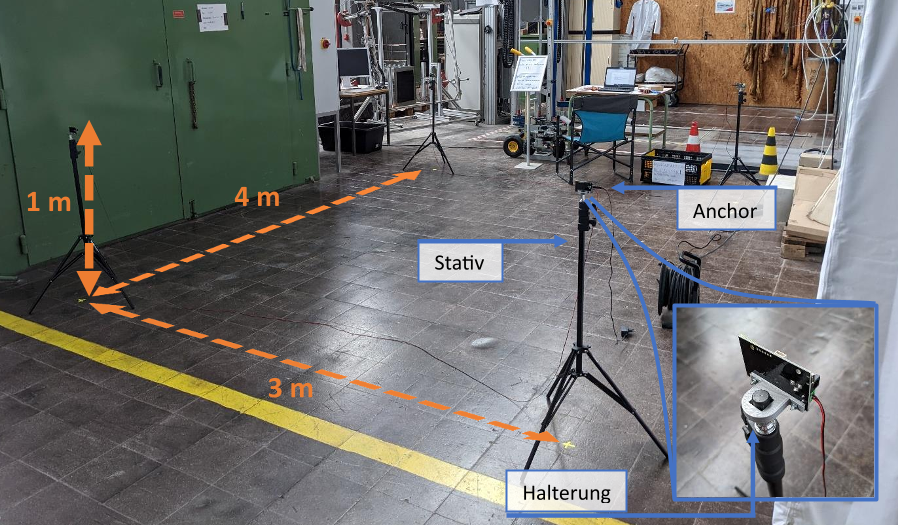
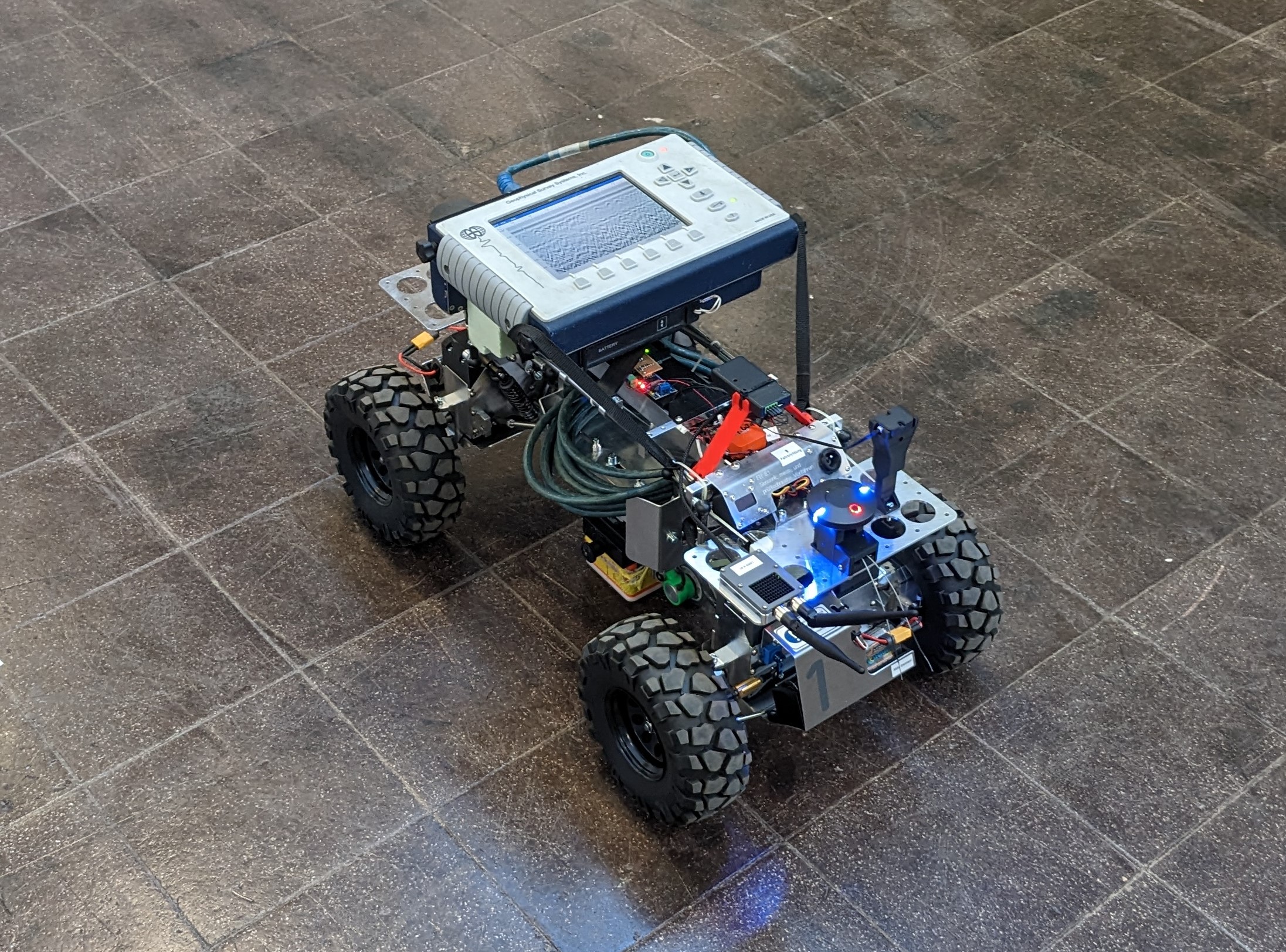
Assessing the condition of civil infrastructure using non-destructive testing methods is of great importance from both an economic and a safety perspective. However, the inspection of large-scale concrete structures, such as bridges or parking garages, is still largely performed manually or semi-automatically, resulting in significant personnel and financial costs. In this work, a mobile inspection robot is adapted and presented for the automated testing of concrete surfaces. An impulse-radar method is employed as a non-destructive testing technique to measure concrete cover. To navigate the robot and determine the positions of measurement points, an ultra-wideband (UWB) localization system is used, which is suitable for both indoor and outdoor environments. This enables position determination without the need for global navigation satellite systems (GNSS), allowing the system to be deployed in a wide variety of locations. The robot is localized using the Time Difference of Arrival (TDoA) technique. Following the system setup, the positional accuracy, trueness, and repeatability of the localization system are validated specifically for the application of robot localization.